
OPEN INSTRUMENTATION / TOTAL CONTROL V7.0 PERF
NEFU-China
Open Microfluidic Platform
An integrated open-source platform for fluorescence detection and dielectrophoretic droplet sorting.
Release 0.8.4 · Windows + PYNQ-Z2

01 / THE PLATFORM
What we built
A modular microfluidic platform that brings observation, fluorescence detection, gate control and syringe-pump operation into a shared experimental workspace.
- Droplet generation
- Fluorescence detection
- Photon counting
- Threshold decision
- PYNQ gating
- DEP sorting
Imaging
Camera observation, recording and snapshots for chip alignment and droplet monitoring.
Photon counting
CH297 acquisition with live counts and adjustable detection thresholds.
Gate control
PYNQ-based output control with threshold hysteresis and a defined LOW state.
Fluid delivery
Syringe-pump settings and operation alongside the optical and detection controls.
02 / HARDWARE
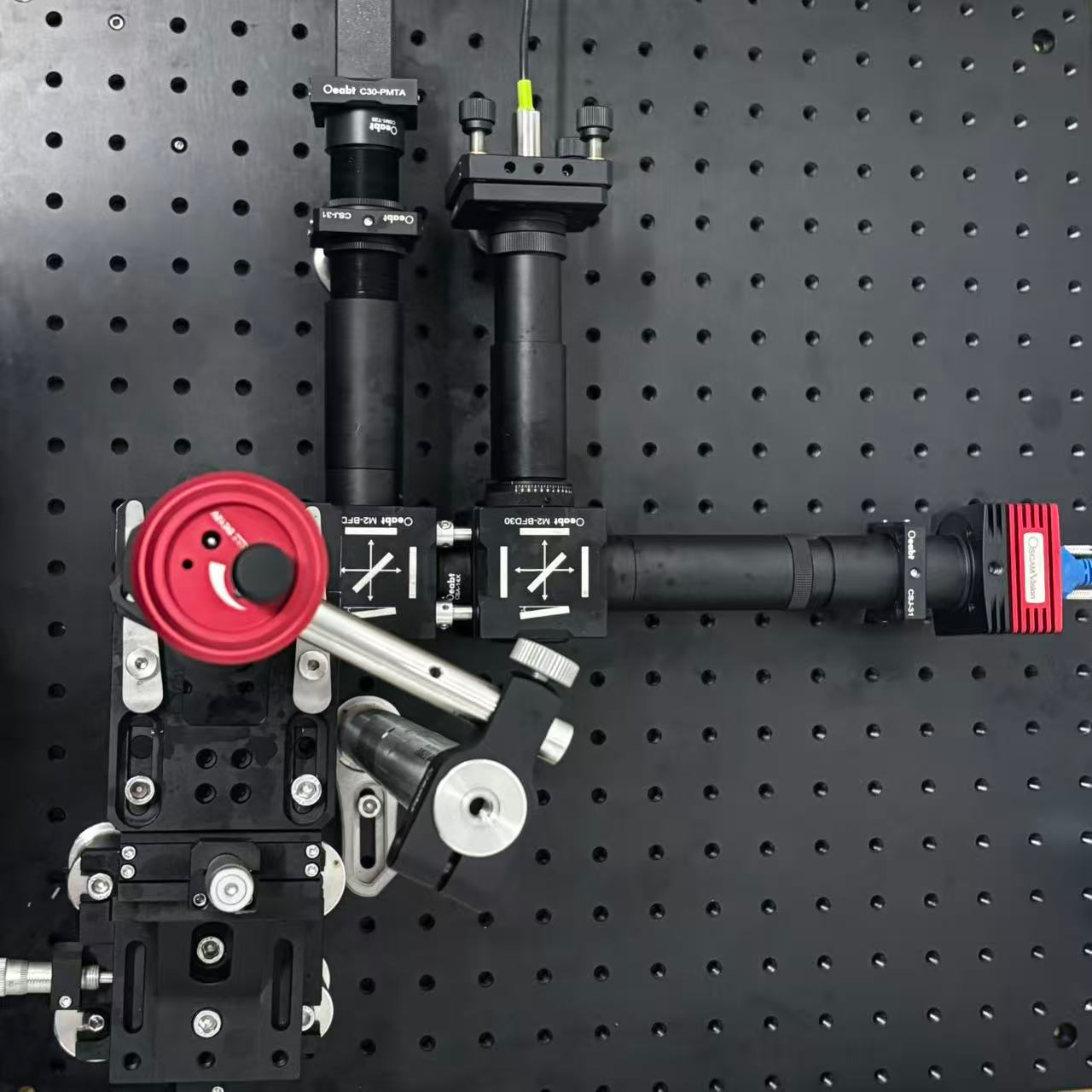
Optical assembly
Hardware files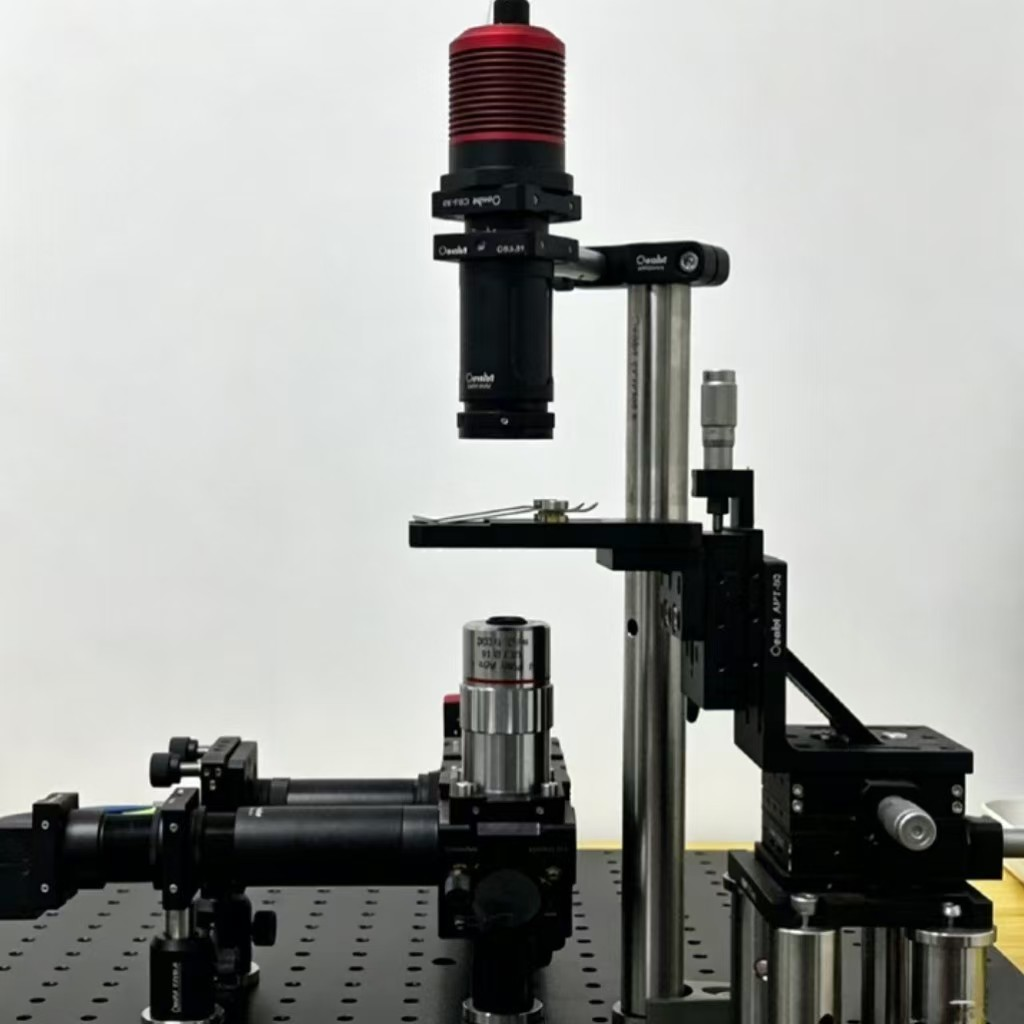
03 / SOFTWARE
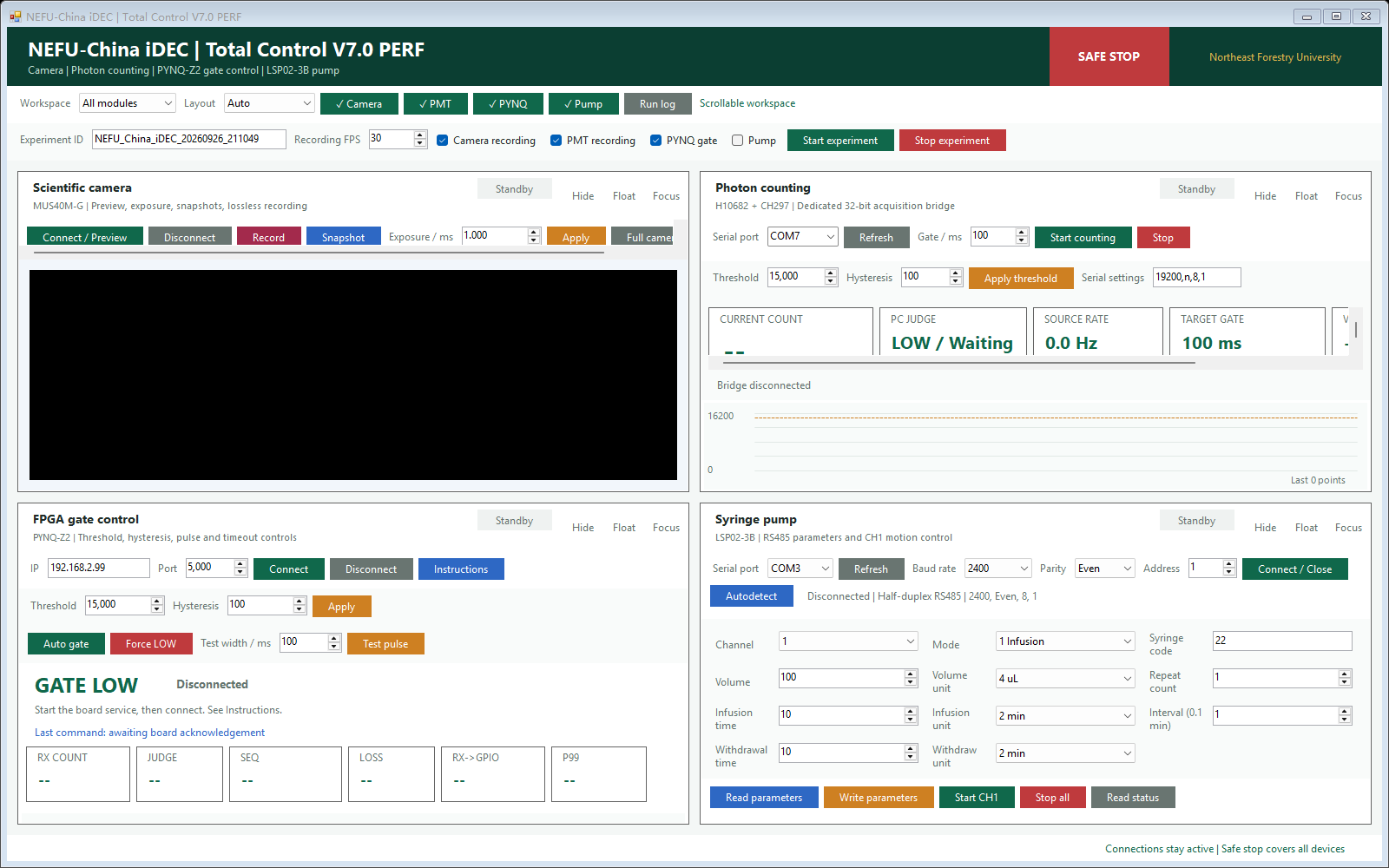
Total Control V7.0 PERF
Explore the sourceOne Windows workspace for the camera, PMT, PYNQ and pump. The release includes prebuilt applications, the C# solution and the matching Python control service.
04 / DEMONSTRATION
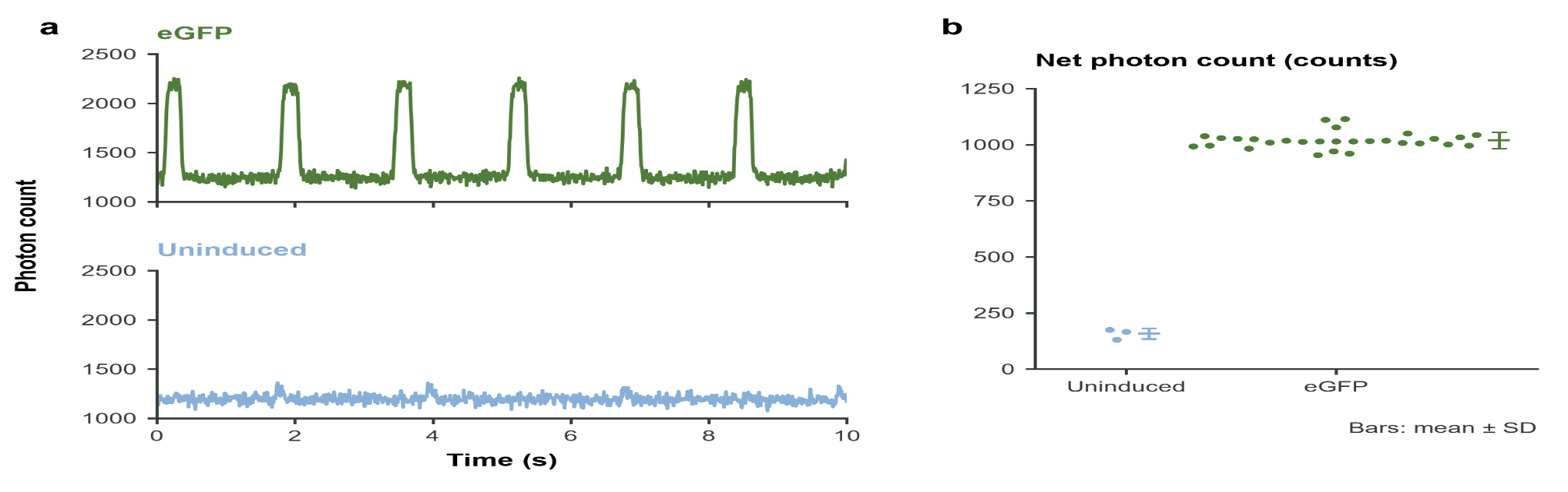
Experimental demonstration
Selected examples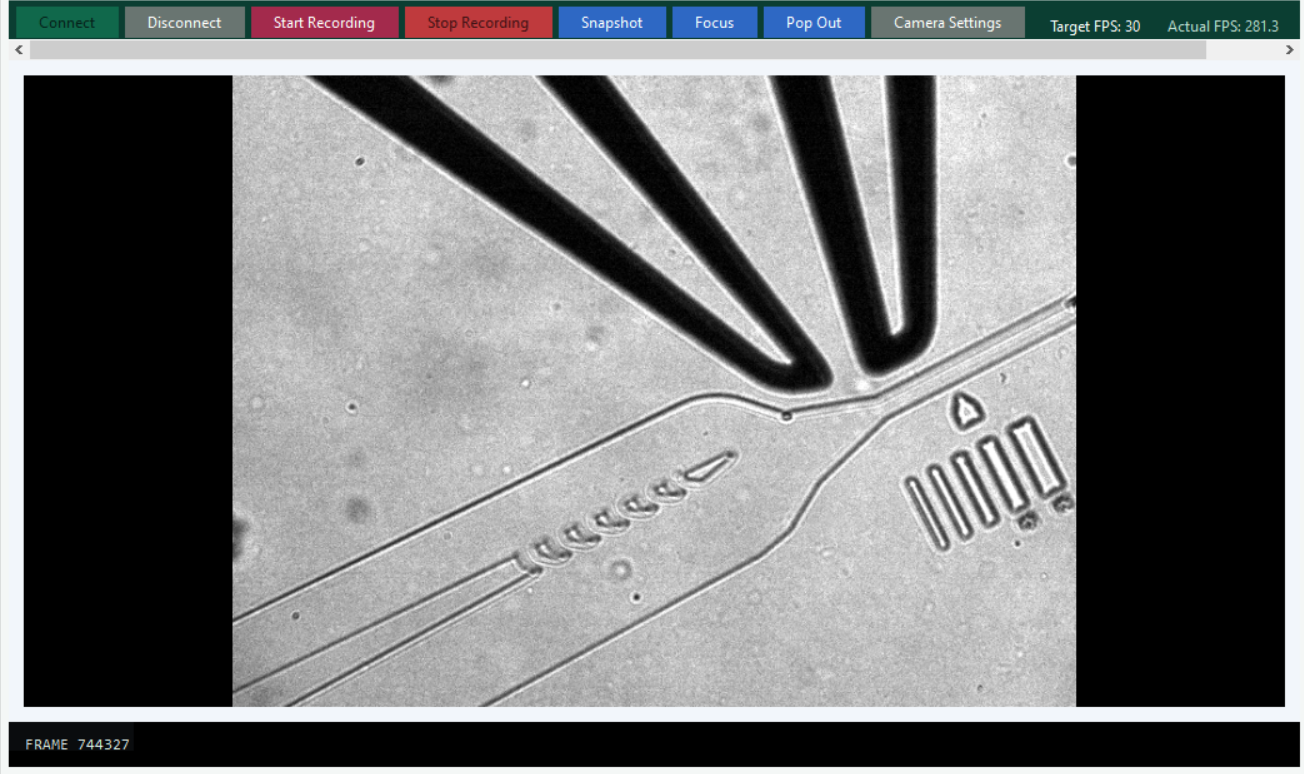
05 / BUILD IT YOURSELF
From components to a working platform
The build guide brings the parts list, optical assembly, electrical connections and commissioning sequence into one practical reference.
Read the Build GuideWindows: .NET Framework 4.8+ and the camera and CH297 vendor components. Board: PYNQ-Z2 with the matching control service.
Assemble the platform
Use the BOM, optical layout and wiring instructions to prepare the bench, fluidics and electrical connections.
Install and configure
Extract the Windows release, install the device components and configure the PC and PYNQ connections.
Commission each module
Check the camera, photon counter, gate output and pump individually. Keep the DEP amplifier disabled during digital checks.
Operate from the workstation
Start
02_RUN_TOTAL_CONTROL_V7_0.cmdand follow the guide for alignment, fluid priming and integrated operation.
06 / ACKNOWLEDGEMENTS
Acknowledgements
Technical support
We thank Haining High-Tech Research Institute, Tianjin University, Dalian University of Technology and TMAXTREE for technical support.
Special thanks to Zhixiong Song, engineer at Haining High-Tech Research Institute.




Equipment and materials
We acknowledge equipment and materials sourced from Xi'an Jiaotong University, FluidicLab and Oeabt.
Special thanks to Kaitong Dang, a graduate student at Xi'an Jiaotong University.



Academic exchange
We thank Haining High-Tech Research Institute, Taiyuan University of Technology and Sichuan University for academic exchange and collaboration.